My goal for Starfighter was to be a quick, proof-of-concept game project to learn game mechanics and prototyping AND to see if my idea for combatresolution was feasible in a game format:
Space Fighter Combat: I have always enjoyed combat/war games and games revolving around science fiction.
Unique Combat Resolution: One frustration I have with war games is the randomness of dice roles for combat resolution, so I wanted to try to create something different.
Simple Mechanics: While I enjoy complex war games, I also appreciate simpler mechanics and wanted the game to feel fast paced.
Throughout this process, I sought regular feedback from Jeremiah Franczyk (Lord of the Rings Online), who helped me with providing clear goals and understanding of game mechanics.
Overview & Technique Highlights
Game Premise: In the distant future… You sit comfortably in cockpit of your fighter. You can feel the engines hum as the star fighter you are piloting speeds effortlessly through space. The sensor scope occasionally lets out a single “beep” and lights up a small blip to your right to let you know that your wingman is still in formation with you. The Neutral Zone is quiet today.
Suddenly, the sensor scope alerts you to two more blips closing fast from the forward-left sector. Tapping a few buttons on your sensor controls, you are able to focus the scans on the new targets. >-HOSTILE-< The red letters flash across your screen. You signal your wingman, release the safeties on your missiles, and charge your energy beams. So much for a quiet patrol in the Neutral Zone…
Players take control of starfighters and engage in a space-born dogfight. Skill in maneuvering the fighter and anticipating your opponents moves will be what decides victory or defeat.
Technique Highlight 1
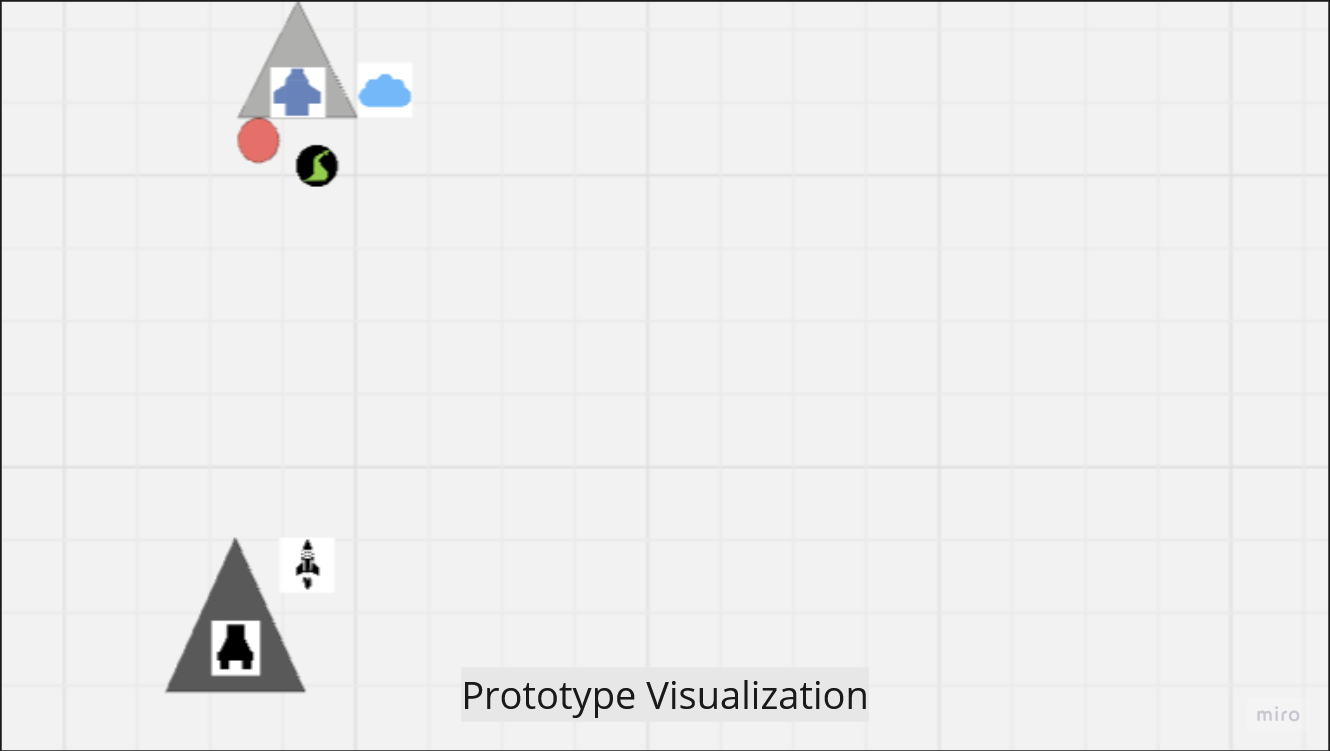
Visualization of Mechanic
Goal: Go over what goal or problem you’re addressing and why you’re addressing it.
Result: Talk about the result of the design. Lorem ipsum dolor sit amet, consectetur adipiscing elit.
Techniques
Lorem ipsum dolor sit amet, consectetur adipiscing elit, sed do eiusmod tempor incididunt ut labore.
Lorem ipsum dolor sit amet, consectetur adipiscing elit, sed do eiusmod tempor incididunt ut labore.
Lorem ipsum dolor sit amet, consectetur adipiscing elit, sed do eiusmod tempor incididunt ut labore.
Technique Highlight 2
Visualization of Mechanic
Goal: Go over what goal or problem you’re addressing and why you’re addressing it.
Result: Talk about the result of the design. Lorem ipsum dolor sit amet, consectetur adipiscing elit.
Techniques
Lorem ipsum dolor sit amet, consectetur adipiscing elit, sed do eiusmod tempor incididunt ut labore.
Lorem ipsum dolor sit amet, consectetur adipiscing elit, sed do eiusmod tempor incididunt ut labore.
Lorem ipsum dolor sit amet, consectetur adipiscing elit, sed do eiusmod tempor incididunt ut labore.
Technique Highlight 3
Visualization of Mechanic
Goal: Go over what goal or problem you’re addressing and why you’re addressing it.
Result: Talk about the result of the design. Lorem ipsum dolor sit amet, consectetur adipiscing elit.
Techniques
Lorem ipsum dolor sit amet, consectetur adipiscing elit, sed do eiusmod tempor incididunt ut labore.
Lorem ipsum dolor sit amet, consectetur adipiscing elit, sed do eiusmod tempor incididunt ut labore.
Lorem ipsum dolor sit amet, consectetur adipiscing elit, sed do eiusmod tempor incididunt ut labore.
Process Breakdown
1. Research, Ideation & Planning
I really enjoy playing strategy games and war games. What frustrates me is when you have placed your troops, ships, fighters, or whatever, into the prime position to do maximum damage and the dice can fail you in a fantastic way. So, I wanted to create a game system where dice rolls for combat results are minimized and/or completely removed to see if it would be a viable game mechanic.
Analyzing Games: I drew from the X-Wing miniatures game for the concept of fighter combat and from Star Fleet Battles as a starting point for the fighter designs.
Ideating Mechanics: Resolving combat results through the use of Action Cards to modify the base results of weapons fire.
Resonant Theming: Combat between fighters is found within multiple genres including historical war games and science fiction. This could allow for multiple uses of the system.
2: Design Document - Rulebook
Premise: I started by figuring out the genre and basic combat mechanic I was going for in this proof-of-concept game. This included:
Weapons systems used by the fighters.
Different defensive maneuvers to reduce damage.
Fighter (and Bomber) types to use and their stats.
Theme: When deciding that I wanted to see if a tactical war game could be created with a combat system that did not use dice, I immediately thought of a dogfight between opposing fighters (having spent hours watching movies and shows like Top Gun, Star Wars, Black Sheep Squadron, and more). I landed on science fiction since it would allow me to create fighters and weapons without the burden of accuracy that modern or historical air-to-air combat would bring.
3. Prototyping
Paper Prototype
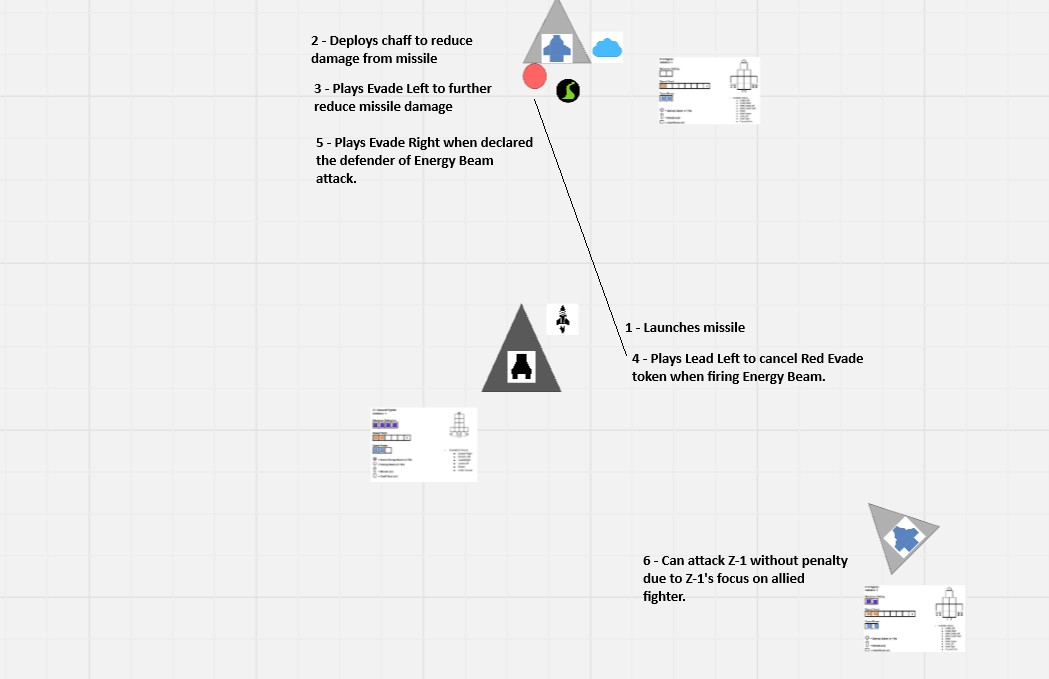
Result: Found that by using two different evade directions, I could create more outcomes for Action Card interactions..
Goal: To visualize directional evading and target leading.
Solution:
Used different color evade tokens (red and green) to represent evading to port or starboard (left and right).
Created different ways to gain or cancel the different color evade tokens by use of the Action Cards.
Rapid Prototype Highlight #1
Result: Talk about the result of the design. Lorem ipsum dolor sit amet, consectetur adipiscing elit.
Goal: Go over what goal or problem you’re addressing and why you’re addressing it.
Solution:
Lorem ipsum dolor sit amet, consectetur adipiscing elit, sed do eiusmod tempor incididunt ut labore.
Lorem ipsum dolor sit amet, consectetur adipiscing elit, sed do eiusmod tempor incididunt ut labore.
Lorem ipsum dolor sit amet, consectetur adipiscing elit, sed do eiusmod tempor incididunt ut labore.
Rapid Prototype Highlight #2
Result: Talk about the result of the design. Lorem ipsum dolor sit amet, consectetur adipiscing elit.
Goal: Go over what goal or problem you’re addressing and why you’re addressing it.
Solution:
Lorem ipsum dolor sit amet, consectetur adipiscing elit, sed do eiusmod tempor incididunt ut labore.
Lorem ipsum dolor sit amet, consectetur adipiscing elit, sed do eiusmod tempor incididunt ut labore.
Lorem ipsum dolor sit amet, consectetur adipiscing elit, sed do eiusmod tempor incididunt ut labore.
4. The First Interactable
Result: Talk about the result of the design. Lorem ipsum dolor sit amet, consectetur adipiscing elit.
Goal: Go over what goal or problem you’re addressing and why you’re addressing it.
Implementation:
Mechanic Synergy 1: Lorem ipsum dolor sit amet, consectetur adipiscing elit, sed do eiusmod tempor incididunt ut labore.
Mechanic Synergy 2: Lorem ipsum dolor sit amet, consectetur adipiscing elit, sed do eiusmod tempor incididunt ut labore.
Narrative Synergy: Lorem ipsum dolor sit amet, consectetur adipiscing elit, sed do eiusmod tempor incididunt ut labore.
5: Playtest & Key Iterations
Playtest #1 Highlight
(Element Name)
Playtest Recording
Result: Talk about the result of the design. Lorem ipsum dolor sit amet, consectetur adipiscing elit.
Feedback & Problem: Lorem ipsum dolor sit amet, consectetur adipiscing elit, sed do eiusmod tempor incididunt.
Solutions: Lorem ipsum dolor sit amet, consectetur adipiscing elit, sed do eiusmod tempor incididunt.
Playtest #2 Highlight
(Element Name)
Playtest Recording
Result: Talk about the result of the design. Lorem ipsum dolor sit amet, consectetur adipiscing elit.
Feedback & Problem: Lorem ipsum dolor sit amet, consectetur adipiscing elit, sed do eiusmod tempor incididunt.
Solutions: Lorem ipsum dolor sit amet, consectetur adipiscing elit, sed do eiusmod tempor incididunt.
Playtest #3 Highlight
(Element Name)
Playtest Recording
Result: Talk about the result of the design. Lorem ipsum dolor sit amet, consectetur adipiscing elit.
Feedback & Problem: Lorem ipsum dolor sit amet, consectetur adipiscing elit, sed do eiusmod tempor incididunt.
Solutions: Lorem ipsum dolor sit amet, consectetur adipiscing elit, sed do eiusmod tempor incididunt.
6. Polished Portfolio Piece
Character Board
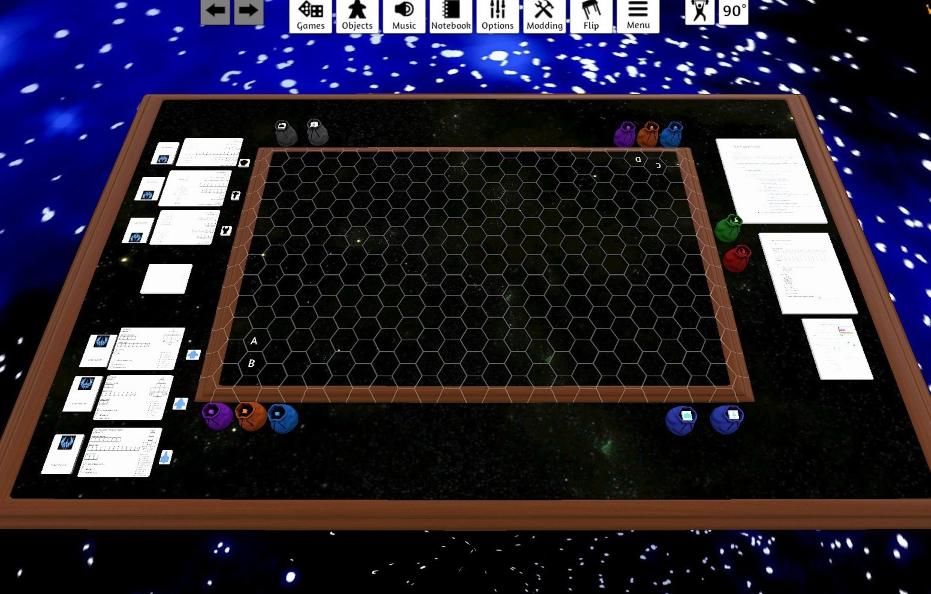
Full Board
Results: Talk about how fleshed out this project is, lorem ipsum dolor sit amet, consectetur adipiscing elit.
Goal: Talk about the experience this project gives you, lorem ipsum dolor sit amet, consectetur adipiscing elit.
Execution:
Talk about the unique selling point lorem ipsum dolor sit amet, consectetur adipiscing elit.
Talk about the unique selling point lorem ipsum dolor sit amet, consectetur adipiscing elit
Talk about the unique selling point lorem ipsum dolor sit amet, consectetur adipiscing elit